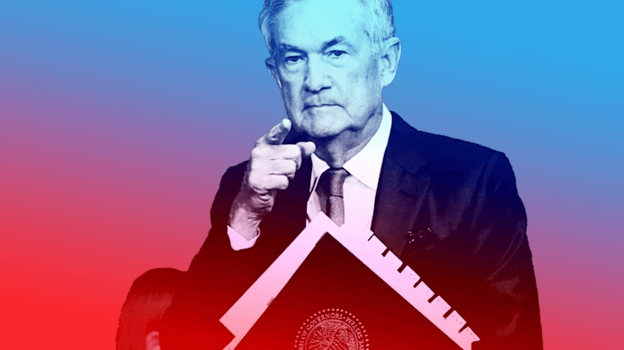
The Fed’s cautious policy stance amid rising geopolitical risks

Mar 20, 2026
The decision to keep interest rates at 3.5–3.75% is not merely a pause, but a clear reflection of the Fed’s defensive stance in an increasingly uncertain economic and geopolitical environment.
The Federal Reserve’s March 2026 policy meeting concluded with a hawkish message, dampening expectations for near-term rate cuts. Amid escalating geopolitical risks and persistent inflation, the Fed is prioritizing macroeconomic stability over easing policy.
A cautious approach
The Fed’s decision to hold rates at 3.50–3.75% signals more than just a pause—it highlights a defensive posture against mounting economic and geopolitical uncertainties, particularly tensions involving the U.S., Israel, and Iran, which Jerome Powell admitted are nearly impossible to model.
The Fed is caught between the risk of rising inflation driven by energy shocks and a potentially weakening labor market. PCE inflation is projected at 2.7%, still above target, with additional pressure from oil prices and tariff policies under Donald Trump.
Analysts describe the Fed’s stance as “conditional easing,” meaning action will only be taken when sufficient data confirms a clear trend, while maintaining stability during a leadership transition period. With growth projected at 2.4% and unemployment at 4.4%, the Fed still has room to wait and observe.
Shifting outlook
The latest projections suggest a clear slowdown in the pace of policy easing. Most Federal Open Market Committee members now expect only one 25-basis-point rate cut this year.
Although the headline outlook appears unchanged from December, Jerome Powell acknowledged that more officials have scaled back expectations, with some even ruling out multiple rate cuts.
Looking further ahead to 2027, internal divisions are becoming more pronounced, with scenarios ranging from rate hikes to holding steady or even deeper cuts.
In this context, Kevin Warsh may face challenges if attempting to push for faster rate cuts aligned with Donald Trump’s stance, as inflationary pressures from energy prices and tariffs persist, while the Fed Chair’s authority remains limited within a collective decision-making framework.
Overall, divergent views within the Fed and multiple macroeconomic uncertainties make the path toward rate cuts increasingly unclear, with little chance of a rapid policy pivot in the near term.
Share


Article Categories
Latest Articles
Tags